내용 이해가 쉽도록 위 사이트 원 번역문 내용을 단문형태로 끊어 표현을 바꿔 기재한다.
다만, 여건상 일부분만 살피는 경우가 많다.
따라서 작업중 파일을 별도로 만든다.
그리고 클라우드 드라이브 폴더에 보관한다.
그리고 이후 계속 수정보완해가기로 한다.
그리고 완료되면 본 페이지에 직접 붙여나가기로 한다.
작업중인 파일은 다음 폴더 안에서 K0649_T0125_in 파일을 참조하면 된다.
https://drive.google.com
●차후 링크가 변경되어 연결되지 않을 때는 다음 페이지 안내를 참조한다. buddhism0077
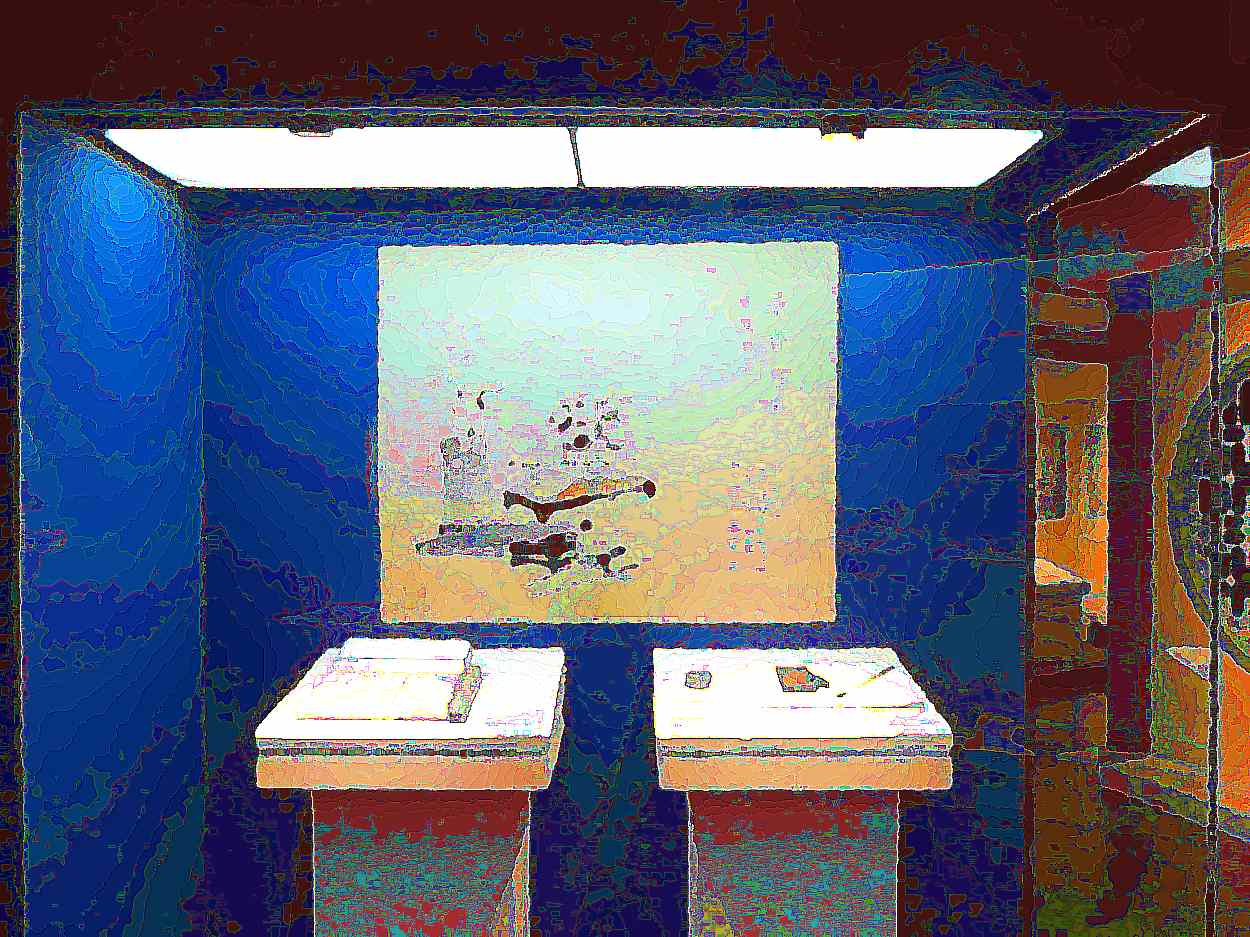
wikiart ○ [pt op tr] 예술작품 사진 공양, 나무불, 나무법, 나무승 Jack-Bush-church-near-king-city-1940
Artist: Jack-Bush
Jack Bush 존 해밀턴 "잭"부시 (1909 년 3 월 20 일 - 1977 년 1 월 24 일) 는 캐나다 추상 화가였다. 그의 그림은 Color Field의 움직임과 Post-painterly Abstraction 과 관련이 있습니다.[...이하 줄임...] from https://en.wikipedia.org/wiki/Jack_Bush Title : church-near-king-city-1940 Info
【범】hūm 오훔(烏▼U24656.gif▲=(合+牛))ㆍ호훔(呼▼U24656.gif▲=(合+牛))ㆍ호훔(虎▼U24656.gif▲=(合+牛))ㆍ호함(戶含)ㆍ후(呴)라 음역. 이 글자는 아(阿)ㆍ하(賀)ㆍ오(汚)ㆍ마(磨)의 네 글자가 모여서 된 것이라 하여, 온갖 교의는 모두 이 한 글자에 들어 있다 함.
051▲ 皮疋必玄穴 ■ 피필필현혈 51 (가죽 피 )(짝 필/ 발 소, 바를 아 )( 반드시 필 )(검을 현 / 오묘하다( 奧妙--) 심오하다( 深奧--), ) (구멍 혈 / 굴 휼 )
025▲ 少殳水氵氺 ■ 소수수수수 25 ( 적을 소/ 젊을 소 )( 몽둥이 수 )( 물 수 ) (삼수변 수) ( 물 수 )
재춘법한자
■ 영-중-일-범-팔-불어 관련-퀴즈 [wiki-bud]Candrakīrti [san-chn]
pañcamī 五地, 第五, 第五地 [san-eng]
potaka $ 범어 young one of an animal [pali-chn]
yoga-ācariya 瑜伽師 [pal-eng]
ti.nagaha.na $ 팔리어 nt.a thicket of grass. [Eng-Ch-Eng]
剎那 (ks!ana). A moment; an instant. [Muller-jpn-Eng]
昔哩 シャリ success, good fortune, virtuous [Glossary_of_Buddhism-Eng]
DHARMAKARA☞ See also: Amitabha Buddha; Dharmakara’s Vows. The Bodhisattva who later became Amitabha Buddha, as related in the Longer Amitabha Sutra. The Bodhisattva Dharmakara is famous for forty-eight Vows, particularly the eighteenth, which promises rebirth in the Pure Land to anyone who recites His name with utmost sincerity and faith (i.e., single-mindedly) at the time of death.
“Dharmakara – Amitabha Buddha in his previous life – pledged to the Buddha preceding him (Lokesvara) that he would fulfill 48 vows in his pursuit of Buddhahood. They appear in the Larger Sukhavati-vyuha (Longer Amitabha Sutra). These vows were made by Dharmakara in order to establish his own Buddha-World, namely Sukhavati (Pure Land), on the basis of the 21 billion Buddha-worlds which he had seen.”
“In the sacred Buddhist texts of China, the Longer Amitabha Sutra concerns Amitabha Buddha and his Pure Land. On a certain occasion, Sakyamuni Buddha (the Buddha of our present age) was on Vulture Peak, surrounded by his disciples. Ananda, the Buddha’s personal attendant, noticed the radiant beauty of Buddha and inquired about the cause of the Buddha’s joy. Sakyamuni relates the following story: In an infinite time in the past, Bhiksu Dharmakara observed the misery of all sentient beings, and moved by compassion, vowed to establish a pure and perfect land where all could be liberated from their suffering. He then made forty-eight Vows in which he promised to establish this land or else he would not attain enlightenment. The Sutra states that Bhiksu Dharmakara practiced for many eons until he accomplished all his vows. Since he has achieved his aims, he is the Buddha of that land – The Buddha of Infinite Light and Life.”
[fra-eng]
polymérise $ 불어 polymerizes [chn_eng_soothil]
天授 Heaven-bestowed, a name of Devadatta, v. 提. [vajracchedikā prajñāpāramitā sūtraṁ]
▼●[羅什] 皆得成就不可量不可稱無有邊不可思議功德, 如是人等, 卽爲荷擔如來阿耨多羅三藐三菩提. 모두가 한량없고 말할 수 없고 끝없고 생각할 수 없는 공덕을 이루리니, 이 런 사람은 여래의 아뇩다라삼먁삼보리를 감당할 것이니라. [玄奘] 如是有情一切成就無量福聚! 皆當成就不可思議、不可稱量無邊福聚! 善現, 如是一切有情, 其肩荷擔如來無上正等菩提! [義淨] 皆得成就不可量、不可稱、不可思議福業之聚! 當知是人, 則為以肩荷負如來無上菩提! 15-06 सर्वे ते सुभूते सत्त्वा अप्रमेयेण पुण्यस्कन्धेनां समन्वागता भविष्यन्ति। अचिन्त्येनातुल्येनामाप्येनापरिमाणेन पुण्यस्कन्धेन समन्वागता भविष्यन्ति। सर्वे ते सुभूते सत्त्वाः समांशेन बोधिं धारयिष्यन्ति वचयिष्यन्ति पर्यवाप्स्यन्ति। **
sarve te subhūte sattvā aprameyeṇa puṇyaskandhena samanvāgatā bhaviṣyanti | acintyenātulyenāmāpyenāparimāṇena puṇyaskandhena samanvāgatā bhaviṣyanti | sarve te subhūte sattvāḥ samāṁśena bodhiṁ dhārayiṣyanti | 수보리여! 그들 모든 중생들은 측량할 수 없는 공덕무더기를 갖춘 자들이 될 것이며, 생각되어질 수 없고 비교되어질 수 없고 재어질 수 없고 헤아려질 수 없는 공덕무더기를 갖춘 자들이 될 것이다. 수보리여! 그들 모든 중생들은 육신을 지닌 채 깨달음을 간직하게 될 것이다. ▼▷[sarve] ① sarve(nj.→ƾ.nom.pl.) → [모든] ▼[te] ① te(pn.ƾ.nom.pl.) → [그들] ▼[subhūte] ① subhūte(ƾ.voc.) → [수보리여!] ▼[sattvā] ① sattvāḥ(ƾ.nom.pl.) → [중생들은] ② sattva(ƿƾ. being, existence, entity; nature; nature character) ▼[aprameyeṇa] ① aprameyeṇa(nj.→ƾ.acc.) → [측량할 수 없는] ② aprameya(nj.[pot.p.] immeasurable, boundless; inscrutable, unfathomable) < a(not) + pra(ƺ. higher, forward) + mā(2.ǁ. to measure) ▼[puṇyaskandhena] ① puṇya+skandhena(ƾ.ins.) → [공덕무더기로 → ~ 무더기를] ② puṇya(ƿ. virtue, religious or moral merit; a virtuous or meritorious act; purity) ② skandha(ƾ. the five objects of sense; the five forms of mundane consciousness) ▼[samanvāgatā] ① samanvāgatāḥ([nj.→]ƾ.nom.pl.) → [수반되어진 → 갖춘 자들이] ② samanvāgata(nj. attended by, furnished or provided with, Buddha) ▼[bhaviṣyanti] ① bhaviṣyanti(fut.Ⅲ.pl.) → [될 것이며,] ② bhū(1.ǁ. to be, become; to be born or produced; to spring or proceed from; to happen) ▼▷[acintyenātulyenāmāpyenāparimāṇena] ① acintyena(nj.→ƾ.ins.) + atulyena(nj.→ƾ.ins.) + amāpyena(nj.→ƾ.ins.) + aparimāṇena(nj.→ƾ.ins.) → [생각되어질 수 없는、 비교되어질 수 없는、 재어질 수 없는、 헤아려질 수 없는] ② cintya(pass.pot.p.) < * + ya(pass.pot.p.) < cint(10.ǁ. to think, have a thought or idea) ② tulya(nj. equal to, similar) < tul(1.ǁ.|10.dž. to weigh, measure; to compare, equal) ② māpya(pass.pot.p.) < * + |p|ya(pass.pot.p.) < mā(3.4.Ʋ. to measure; to compare with) ② aparimāṇa(nj. immeasurable, immense, unbounded) ▼[puṇyaskandhena] ① puṇya+skandhena(ƾ.ins.) → [공덕무더기로 → ~ 무더기를] ▼[samanvāgatā] ① samanvāgatāḥ([nj.→]ƾ.nom.pl.) → [수반되어진 → 갖춘 자들이] ▼[bhaviṣyanti] ① bhaviṣyanti(fut.Ⅲ.pl.) → [될 것이다.] ② bhū(1.ǁ. to be, become; to be born or produced; to spring or proceed from; to happen) ▼▷[sarve] ① sarve(nj.→ƾ.nom.pl.) → [모든] ▼[te] ① te(pn.ƾ.nom.pl.) → [그들] ▼[subhūte] ① subhūte(ƾ.voc.) → [수보리여!] ▼[sattvāḥ] ① sattvāḥ(ƾ.nom.pl.) → [중생들은] ② sattva(ƿƾ. being, existence, entity; nature; nature character) ▼[samāṁśena] ① sa+māṁśena(nj.ins.→adv.) → [육신을 지닌 채] ② samāṁśa(nj.È 식육이 따르는, 肉이 있는) < sa(ƺ. with, along with; similar, like) + māṁsa(ƿ. flesh, meat; the flesh of fish; the fleshy part of a fruit: ƾ. a worm) ▼[bodhiṁ] ① bodhiṁ(ƾ.acc.) → [깨달음을] ② bodhi(ƾ. perfect wisdom or enlightenment) ▼[dhārayiṣyanti] ① dhārayiṣyanti(caus.fut.Ⅲ.pl.) → [간직하게 될 것이다.] ② dhṛ(1.ǁ.10.dž. to hold, bear, carry; maintain, support) > dhāray(caus.) 출처 봉선사_범어연구소_현진스님_금강경_범어강의
『능단금강반야바라밀다경』(能斷金剛般若波羅密多經) - 범어 텍스트 vajracchedikā prajñāpāramitā sūtraṁ
♣K0116-001♧
♣K0117-001♧